
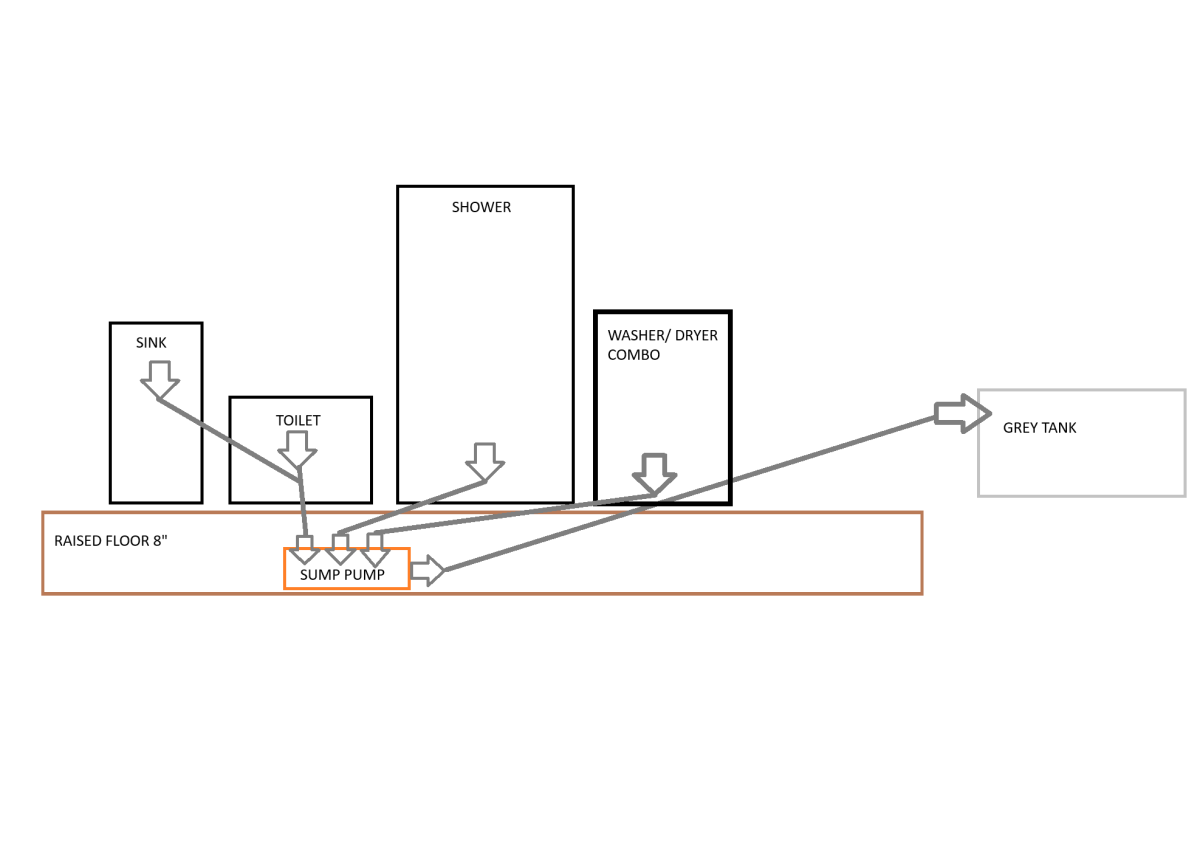
Bathroom Plumbing Concept – Raised Floor With Integrated Sump Pump System

Bathroom Plumbing Concept – Raised Floor With Integrated Sump Pump System

This post documents the current concept for how the bathroom plumbing will function inside the cargo trailer conversion.
The bathroom floor will be raised approximately 8 inches, creating a dedicated plumbing cavity beneath the finished floor.
All bathroom drains—including the shower, toilet urine separator, and bathroom sink—will run inside this raised floor space.
Access panels will be built into the floor structure to allow maintenance of lines, fittings, and the sump pump.


System Overview

The raised floor provides enough vertical space to route all plumbing internally without mounting any tanks or lines under the trailer.
A 12V sump pump box will collect wastewater from the bathroom fixtures and pump it into the interior gray tank.
This approach keeps all plumbing inside the insulated envelope of the trailer for freeze protection and easier serviceability.


Plumbing Flow Diagram


                 ┌───────────────────────────────┐
                 │            SINK               │
                 │  (Drain enters floor cavity)  │
                 └──────────────┬────────────────┘
                                │
                                ▼
                 ┌───────────────────────────────┐
                 │     COMPOSTING TOILET         │
                 │   (Urine Separator Outlet)    │
                 └──────────────┬────────────────┘
                                │
                                │  Sink + Urine Combined Drain
                                ▼
                 ┌───────────────────────────────┐
                 │           SHOWER              │
                 │ (Low-profile drain to sump)   │
                 └──────────────┬────────────────┘
                                │
                                ▼
                 ┌───────────────────────────────┐
                 │     12V SUMP PUMP BOX         │
                 │  - Collects all bathroom flow │
                 │  - Auto pump activation       │
                 └──────────────┬────────────────┘
                                │ Pressurized Output
                                ▼
                 ┌───────────────────────────────┐
                 │          CHECK VALVE          │
                 │ (Prevents backflow from tank) │
                 └──────────────┬────────────────┘
                                │
                                ▼
                 ┌───────────────────────────────┐
                 │         INTERIOR GRAY TANK     │
                 │  (Mounted inside trailer)      │
                 └───────────────────────────────┘


Key Design Details

  • Raised Floor (8″): Creates a protected plumbing chase for all bathroom drains and the sump pump.
  • Access Panels: Built into the raised floor for serviceability of the sump pump, fittings, and drain lines.
  • Toilet Elevation: The composting toilet will sit at least 1 foot above the sump pump to ensure reliable gravity flow.
  • Sink Drain Tie-In: The bathroom sink will tie into the urine line to flush and clean the line and provide enough liquid volume to activate the sump pump float switch.
  • Shower Drain: A low-profile drain routes directly into the sump pump box.
  • Check Valve Placement: Installed on the sump pump discharge line before the gray tank to prevent backflow.
  • Interior Gray Tank: All wastewater is pumped into an interior tank for freeze protection and easier maintenance.

Why This System Works Well for an Interior-Only Plumbing Layout

This design keeps all plumbing components inside the conditioned space of the trailer, eliminating the need for under‑floor tanks or exposed plumbing.
The sump pump allows the gray tank to be positioned higher than the shower pan or toilet outlet, giving full flexibility in tank placement.

  • No exterior tanks: Better freeze protection and no road debris exposure.
  • Flexible routing: Pumped discharge allows tank placement anywhere inside the trailer.
  • Serviceability: Access panels ensure all components can be reached without tearing up the floor.
  • Cleaner plumbing: Sink tie‑in keeps urine lines flushed and reduces odor risk.

This mock‑up represents the current direction for the bathroom plumbing system and will be refined as the layout and tank placement are finalized.
Updated Diagram – Urine Separator, Sink Drain, Sump Pump, and Gray Tank System

Updated Diagram – Urine Separator, Sink Drain, Sump Pump, and Gray Tank System

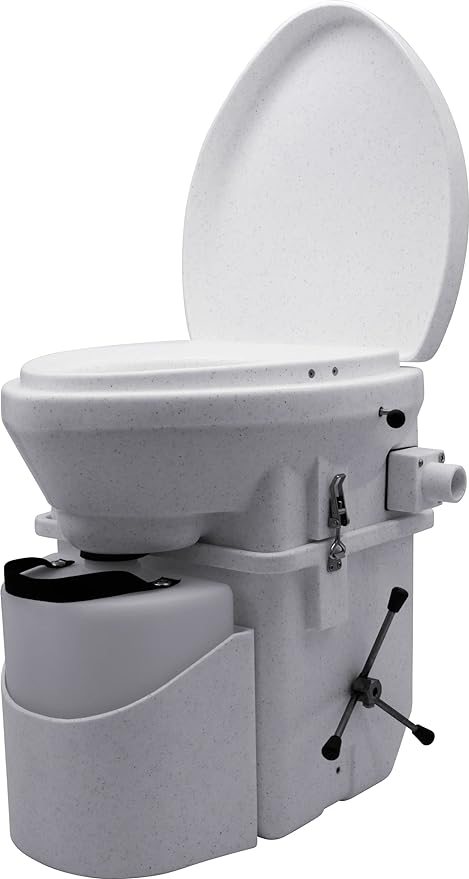
This diagram shows the updated plumbing layout for the bathroom: the composting toilet’s urine separator and the bathroom sink both drain into the sump pump box.
The sump pump then sends all liquids to the interior gray tank, with a check valve placed before the gray tank to prevent any backflow.
The toilet sits elevated above the sump pump by at least one foot, ensuring reliable gravity flow.


System Diagram (Top‑Down Flow)


                 ┌───────────────────────────────┐
                 │     COMPOSTING TOILET         │
                 │   (Urine Separator Outlet)    │
                 └──────────────┬────────────────┘
                                │
                                │  Gravity-fed Urine Line
                                ▼
                 ┌───────────────────────────────┐
                 │       BATHROOM SINK           │
                 │  (Drain Tied Into Urine Line) │
                 └──────────────┬────────────────┘
                                │
                                ▼
                 ┌───────────────────────────────┐
                 │   COMBINED DRAIN LINE (1")    │
                 │  Sink + Urine to Sump Pump    │
                 └──────────────┬────────────────┘
                                │
                                ▼
                 ┌───────────────────────────────┐
                 │     SUMP PUMP BOX (12V)       │
                 │  - Collects shower water      │
                 │  - Collects urine + sink      │
                 │  - Auto pump activation       │
                 └──────────────┬────────────────┘
                                │ Pressurized Output
                                ▼
                 ┌───────────────────────────────┐
                 │         CHECK VALVE           │
                 │  (Prevents backflow from tank)│
                 └──────────────┬────────────────┘
                                │
                                ▼
                 ┌───────────────────────────────┐
                 │       INTERIOR GRAY TANK      │
                 │  - Receives all pumped liquid │
                 └───────────────────────────────┘


Side‑View Height Relationship


   [Composting Toilet]
            │
            │  (Urine Line)
            ▼
   [Sink Drain Tie-In]
            │
            ▼
   (Combined Drain Line)
            │
            ▼
   [Raised Shower Platform]───────────────┐
            │                              │
            ▼                              │
      [Sump Pump Box]  <───────────────────┘
            │   (Pumps upward)
            ▼
      [Check Valve]
            │
            ▼
      [Interior Gray Tank]

This layout ensures the toilet and sink both drain by gravity into the sump pump, while the sump pump handles all elevation changes needed to reach the gray tank.


Why the Sink Tie‑In Helps

Tying the bathroom sink into the urine line provides several benefits:

  • Flushes the urine line with clean water every time the sink is used.
  • Prevents salt buildup or odor in the urine hose.
  • Adds enough liquid volume to reliably trigger the sump pump float switch.
  • Reduces plumbing complexity by combining two low‑flow drains into one line.

Why the Check Valve Belongs Before the Gray Tank

Placing the check valve on the pressurized discharge line (not the urine line) ensures:

  • No gray water can flow backward into the sump pump box.
  • No contamination risk for the toilet or sink drain lines.
  • The sump pump remains protected from tank pressure or sloshing.

This updated diagram reflects the final intended flow path for the bathroom plumbing system and will be used as part of the full interior‑only plumbing documentation.

Build Notes – Floor, Insulation, and Bathroom Plumbing

Build Notes & Lessons Learned – Floor, Insulation, and Bathroom Plumbing

As I continue refining the design for the cargo trailer conversion, I’m collecting important details that will influence how the trailer is ordered and how the interior systems are built.
These notes focus on floor structure, insulation planning, and bathroom plumbing considerations based on research and reference videos.


No Dovetail for a Level Interior Floor

For this build, a flat, level floor is essential. This means the trailer must be ordered with no dovetail.
A dovetail is the angled drop at the rear of many cargo trailers, designed for loading low vehicles.
While useful for ramps, it creates an uneven interior floor and complicates cabinetry, flooring, and bathroom layout.

Choosing a non-dovetail rear ensures:

  • A fully level floor from front to back
  • Simpler installation of flooring, insulation, and cabinetry
  • Better support for the raised shower platform and tank placement

Interior Doors Must Be Raised for Floor Insulation

If the trailer does not come factory-insulated, the interior floor will be built up with insulation and subfloor layers.
This adds approximately 1.5 inches of height to the finished floor.

To avoid clearance issues:

  • Interior doors (bathroom, bedroom, etc.) must be raised at least 1.5″ during installation.
  • Dealers should not install interior trim — trim should be left loose inside the trailer.

This prevents the door from dragging on the finished floor and allows trim to be installed after insulation and flooring are complete.


Backer Boards Before Insulation (Video Reference)

In this video (timestamp 2:15):

Cargo Trailer Conversion – Insulation Prep

The creator explains the purpose of installing backer boards before adding insulation.
These boards provide:

  • A solid mounting surface for walls and fixtures
  • Structural support for areas where screws cannot bite into foam
  • Better rigidity and long-term durability

This reinforces the plan to include backer boards in key areas before insulating the walls and ceiling.


Urine Separator Plumbing Into Sump Pump (Video Reference)

In this video (timestamp 27:50):

Cargo Trailer Bathroom Plumbing – Urine Separator & Sump Pump

The builder demonstrates how the urine separator line from a composting toilet can be routed into the same shower sump pump box that feeds the gray tank.
This setup includes:

  • A dedicated urine drain line entering the sump box
  • A check valve to prevent backflow from the gray tank
  • Automatic pumping of both shower water and urine into the gray tank

This is a useful reference for integrating the composting toilet’s liquid output into the interior gray tank system without needing a separate container.


Summary

These notes help shape several key decisions for the build:

  • Order the trailer without a dovetail for a level interior floor.
  • Ensure interior doors are raised 1.5″ if insulating the floor after delivery.
  • Use backer boards before insulation for structural support.
  • Consider routing the urine separator into the sump pump with a check valve.

These insights will be incorporated into the final layout and construction plan as the build progresses.

Shower

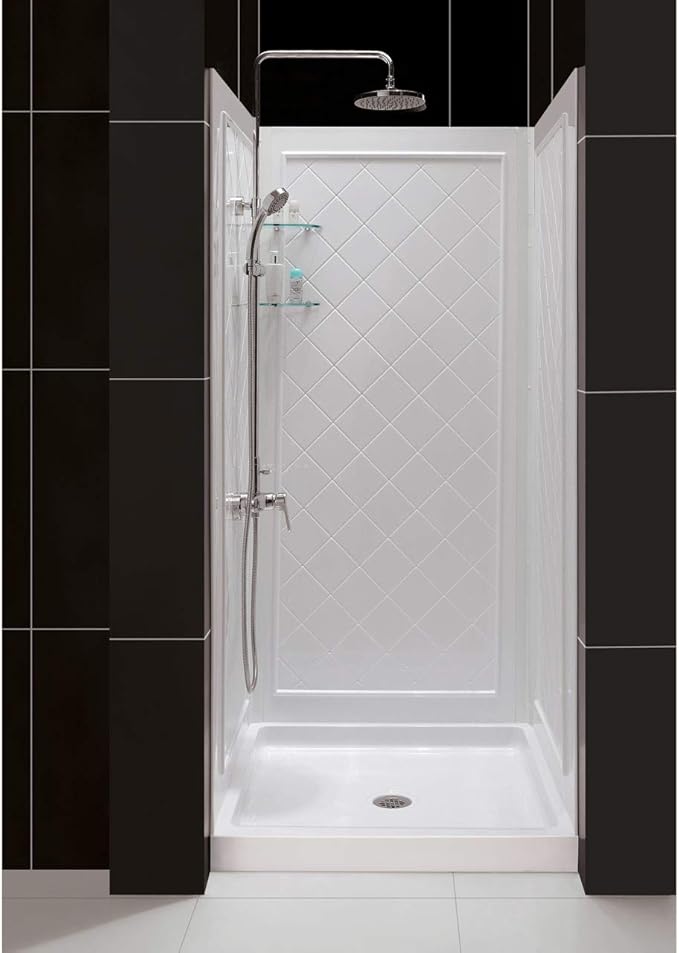
DreamLine 36″ × 36″ Shower Base & QWALL‑5 Backwall Kit

Model: DL‑6194C‑01
Brand: DreamLine
Color: White
Material: Acrylic / ABS
Kit Includes: 36″ × 36″ Single‑Threshold Shower Base + QWALL‑5 Backwall Panels
Product Link:

View on Amazon

DreamLine 36x36 Shower Base and QWALL-5 Backwall Kit

Product Dimensions

Overall Kit Size (D × W × H): 36″ × 36″ × 76.75″
Shower Base: 36″ × 36″ (Center Drain)
Backwall Panels: Trim‑to‑fit design

Weights

Total Weight: 79.4 lbs

Key Features

  • SlipGrip textured floor surface for improved safety
  • High‑gloss, non‑porous acrylic for easy cleaning
  • Backwall panels made from Acrylic/ABS
  • Backwalls install over a solid surface (not directly to studs)
  • Base installs directly to studs; cUPC certified
  • Trim‑to‑size sidewall design for flexible installation
  • Lifetime Limited Warranty (base), 1‑year Limited Warranty (backwalls)