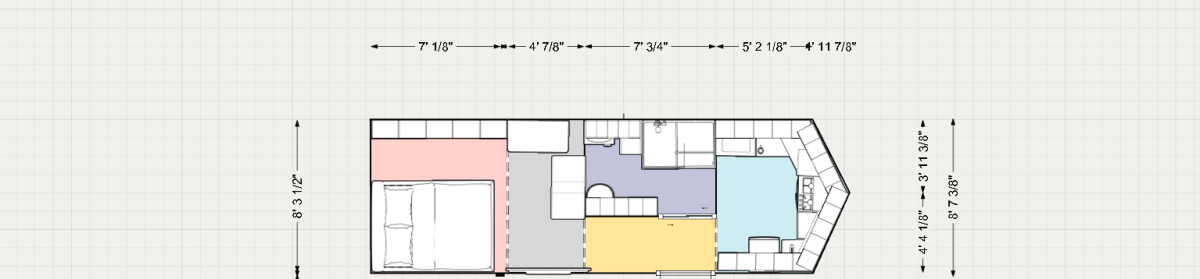
Kitchen Propane Routing Plan
The kitchen propane system supplies the CAMPLUX 21″ Propane Range & Oven using two propane tanks mounted on the front of the trailer.
This page documents the routing, safety components, shutoff strategy, and installation considerations for a clean, safe, and serviceable propane layout.
1. Propane Supply Overview
The propane system begins at the dual-tank setup mounted on the front of the trailer.
A two-stage automatic changeover regulator ensures uninterrupted supply by switching between tanks as needed.
Primary Components:
- Two front-mounted propane tanks
- Automatic changeover regulator
- High-pressure pigtails (tank → regulator)
- Low-pressure propane line (regulator → kitchen)
- Exterior frame-mounted propane routing
- Interior shutoff valve at the stove
- Propane leak detector inside the kitchen
2. Exterior Propane Line Routing
Propane lines must remain outside the living space for the majority of their run.
The safest and cleanest routing path is along the trailer’s frame rails, secured at regular intervals.
Routing Path:
- Regulator outlet → down to frame rail
- Run along driver-side or passenger-side frame rail (builder’s choice)
- Secure with propane-rated clamps every 12–18 inches
- Enter the kitchen through a sealed, grommeted penetration
All penetrations into the interior must be sealed to prevent fumes, moisture, or pests from entering the living space.
3. Interior Propane Routing (Kitchen)
Once inside the kitchen, the propane line transitions to a short interior run that terminates at the stove’s connection point.
Interior Components:
- Interior shutoff valve (required)
- Flexible propane appliance connector (stove → shutoff valve)
- Grommeted wall penetration
- Propane leak detector mounted low to the floor
The shutoff valve should be easily accessible without moving the stove.
4. Stove Connection
The CAMPLUX 21″ Propane Range & Oven connects to the propane system using a flexible appliance connector rated for RV use.
Connection Steps:
- Install shutoff valve on the interior propane stub-out
- Attach flexible connector from shutoff valve to stove inlet
- Check for leaks using soapy water or an approved leak detection solution
- Verify proper burner ignition and flame characteristics
The stove enclosure must maintain required clearances for heat and ventilation.
5. Safety Systems
Propane safety is critical in a compact living space. The kitchen includes multiple layers of protection.
Safety Components:
- Propane leak detector: mounted low near the stove
- CO detector: mounted at breathing height
- Interior shutoff valve: quick access for emergencies
- Exterior regulator: two-stage for stable pressure
- Proper ventilation: especially around the stove enclosure
All propane components must be RV-rated and installed according to manufacturer specifications.
6. Future-Proofing & Expansion
The propane routing plan allows for future expansion without major rework.
Additional propane appliances can be added by installing a manifold near the regulator or adding a tee fitting at the frame rail.
Possible Future Additions:
- Propane tankless water heater (if chosen)
- Outdoor quick-connect for grill or fire pit
- Propane heater (if ever needed)
The dual-tank setup and frame-rail routing make expansion straightforward.
7. System Summary
The kitchen propane system is designed for safety, simplicity, and serviceability.
Propane is supplied from dual front-mounted tanks, routed along the trailer frame, and enters the kitchen through a sealed penetration.
A shutoff valve, leak detector, and flexible appliance connector complete the installation.
- Supply: dual tanks → regulator → frame rail
- Routing: exterior run → sealed entry → interior shutoff
- Appliance: CAMPLUX 21″ stove/oven
- Safety: leak detector, CO detector, shutoff valve
As the build progresses, this page will be updated with final routing photos, regulator model, and installation notes.