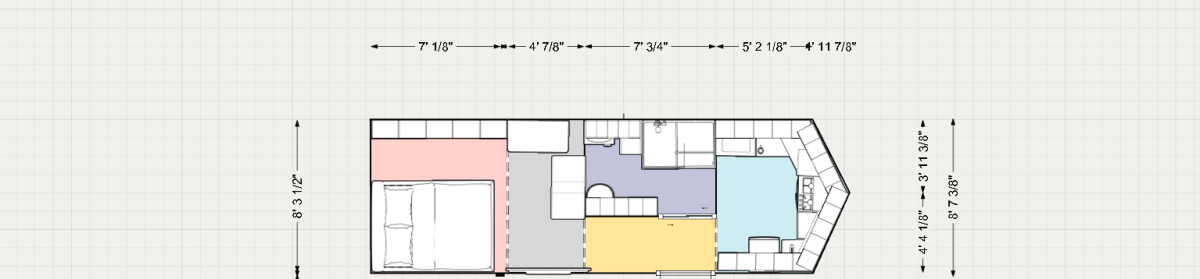
Kitchen Installation Plan
This step-by-step installation plan outlines the sequence for building the kitchen systems in the CTC.
It is designed to be universal and system-agnostic so it remains valid even if appliances, sink type, grey tank size, or hot water heater models change.
The focus here is on water, propane, electrical, ventilation, and appliance integration.
Cabinets, counters, and finish work will be addressed separately in the construction phase.
1. Planning & Layout Confirmation
- Confirm final locations for:
- Kitchen sink (type TBD)
- RecPro 12V refrigerator
- Propane stove/oven
- Blueridge indoor air handler
- Dedicated kitchen grey tank (10–15 gallons)
- Review the Kitchen Systems, Plumbing Diagram, Propane Routing Plan, and Electrical Plan pages.
- Mark wall, floor, and under-floor routing paths for PEX, drains, propane, and electrical.
2. Install Water Supply Lines (Cold & Hot)
- Run cold PEX from the bathroom water hub to the kitchen sink location.
- Run hot PEX from the hot water heater (garage) to the kitchen sink.
- Use insulated PEX for the hot line due to distance.
- Install shutoff valves for both hot and cold under the sink.
- Leave extra slack (service loop) for future sink type changes.
3. Install Kitchen Sink & Drain Assembly
- Set the sink in its temporary or final position (sink type may change later).
- Install faucet and connect hot/cold PEX lines.
- Install P-trap and drain assembly.
- Route drain line downward through the floor to the grey tank inlet.
- Install an air admittance valve (AAV) under the sink.
- Ensure drain slope is maintained from sink to tank.
4. Install Kitchen Grey Tank (10–15 Gallons)
- Mount the grey tank under the trailer in the planned location.
- Connect the sink drain line to the tank inlet.
- Install a vent line for the grey tank.
- Install a grey outlet fitting and hose connection for campsite discharge.
- Ensure tank is accessible for service and inspection.
5. Install Propane System for Stove
- Mount dual propane tanks on the front of the trailer.
- Install automatic changeover regulator.
- Run exterior propane line along the frame rail toward the kitchen.
- Enter the kitchen through a sealed, grommeted penetration.
- Install interior shutoff valve near the stove location.
- Connect stove using a flexible propane appliance connector.
- Install propane leak detector low to the floor.
- Test all connections with approved leak detection solution.
6. Install Electrical Systems
- Refrigerator:
- Run dedicated 12V circuit using manufacturer-recommended wire gauge.
- Provide ventilation space behind and above the unit.
- Lighting:
- Install overhead 12V LED lighting.
- Optional: install under-cabinet lighting.
- Outlets:
- Install GFCI outlet near countertop.
- Install additional convenience outlets as needed.
- Use 12 AWG wire for 20A circuits.
- Stove ignition:
- Connect 12V or battery ignition depending on model.
7. Install Blueridge Indoor Air Handler
- Mount the air handler high on the wall with required clearances.
- Run refrigerant lines, electrical, and condensate drain to the garage condenser.
- Ensure condensate drain slopes downward and exits properly.
- Leave access for filter cleaning and maintenance.
8. Appliance Installation & Securing
- Install refrigerator and secure it to prevent movement during towing.
- Install stove/oven and verify clearances and ventilation.
- Install sink and faucet in final position once counters are built.
- Verify all appliances have proper airflow and access panels.
9. System Testing
- Water: pressurize system and check for leaks at all PEX connections.
- Drainage: run water through sink and verify proper flow to grey tank.
- Propane: test stove ignition and burner flame quality.
- Electrical: test refrigerator, outlets, and lighting circuits.
- HVAC: test air handler operation and condensate drainage.
10. Documentation & Finalization
- Label shutoff valves, electrical circuits, and propane lines.
- Update Kitchen Systems, Plumbing Diagram, Propane Routing Plan, and Electrical Plan with any changes.
- Record final appliance models, wiring sizes, and routing notes.
- Prepare for cabinet and countertop installation in the construction phase.
Plan Notes
This installation plan is intentionally universal.
It remains valid even if the sink type, refrigerator model, stove, grey tank size, or hot water heater change.
Only local details will need updating.
Future revisions will include model-specific requirements and installation photos.