Hot Water Installation Plan
The Hot Water Installation Plan outlines the physical installation, mounting, routing, protection, and testing procedures for the hot water system in the CTC build.
The system is designed to support either an on-demand gas water heater or a 10–20 gallon electric tank water heater, both located in the garage.
This plan ensures that either option can be installed cleanly without modifying the plumbing architecture.
System Overview
The hot water system consists of:
- Cold water feed from the bathroom manifold
- Hot water heater (gas on-demand or electric tank)
- Hot water manifold in the garage
- Hot water distribution lines to bathroom and kitchen fixtures
- Optional hot water branch to the passenger-side exterior outlet
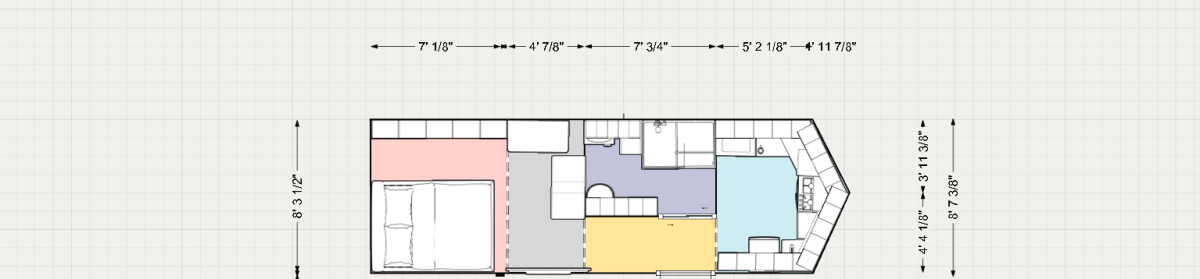
The garage serves as the dedicated hot water equipment bay, providing space, ventilation, and service access.
Installation Steps
1. Preparing the Garage Mounting Area
- Identify a solid section of garage framing for mounting the heater.
- Ensure adequate clearance for service access and ventilation.
- Install a backing board if needed for structural support.
- Plan routing paths for cold feed, hot output, and optional propane (gas heater only).
2. Installing the Cold Water Feed
- Run a dedicated cold water line from the bathroom cold water manifold to the garage.
- Use PEX with proper clamps and abrasion protection.
- Route inside conditioned space whenever possible.
- Install a shutoff valve near the heater for service isolation.
3. Mounting the Water Heater
Option A: On-Demand Gas Water Heater
- Mount heater to garage framing using manufacturer hardware.
- Connect cold inlet and hot outlet using PEX or approved fittings.
- Connect propane supply from the house propane system (Tank 1).
- Install shutoff valve on the propane branch.
- Install venting per manufacturer requirements (exhaust + combustion air).
- Ensure clearances for heat and airflow.
Option B: Electric Tank Water Heater (10–20 Gallon)
- Mount heater on a platform or secure to garage floor/wall.
- Install a drain pan with an overflow route.
- Connect cold inlet and hot outlet using PEX.
- Provide electrical supply (120V or 240V depending on model).
- Install a shutoff valve on the cold inlet.
- Propane branch remains capped and labeled “Future Gas Water Heater”.
4. Installing the Hot Water Manifold
- Mount the hot water manifold near the heater for easy access.
- Connect the heater’s hot outlet to the manifold using insulated PEX.
- Label each branch: Shower, Bathroom Sink, Kitchen Sink, Passenger-Side Outlet (optional).
- Install shutoff valves on each branch for serviceability.
5. Routing Hot Water Lines
- Run insulated PEX lines from the manifold to each fixture.
- Use cushioned clamps to prevent vibration and abrasion.
- Route lines inside conditioned space whenever possible.
- Optional: Run a hot water branch to the passenger-side exterior outlet.
Safety & Protection
- Pressure Relief Valve: Required for both heater types; route discharge safely.
- Thermal Protection: Insulate all hot water lines.
- Electrical Safety (Electric Tank): Use correct breaker size and wiring.
- Combustion Safety (Gas Heater): Follow venting and clearance requirements.
- Wall Penetrations: Use grommets or bulkhead fittings.
Testing Procedures
- Cold Feed Test: Pressurize cold line and check for leaks.
- Hot Water Test: Run heater and verify hot water at all fixtures.
- Temperature Stability Test: Confirm consistent output temperature.
- Propane Test (Gas Heater): Perform leak test on propane branch.
- Electrical Test (Electric Tank): Verify correct voltage and breaker operation.
Integration With the Plumbing System
The hot water system integrates with the larger plumbing system as follows:
- Cold Water: Bathroom manifold → Heater → Hot water manifold → Fixtures
- Hot Water: Heater → Bathroom → Kitchen → Optional passenger-side outlet
- Grey Water: All hot water fixtures drain into their respective grey systems
Related Pages
- Hot Water System Plan
- Hot Water System Diagram
- Plumbing Master Plan
- Propane Routing Master Plan
- Propane Installation Plan
How This Plan Will Evolve
Once the final water heater type is selected, this installation plan will be updated with heater-specific mounting instructions, venting or electrical requirements, and installation photos.
The overall routing and system architecture will remain the same regardless of heater choice.