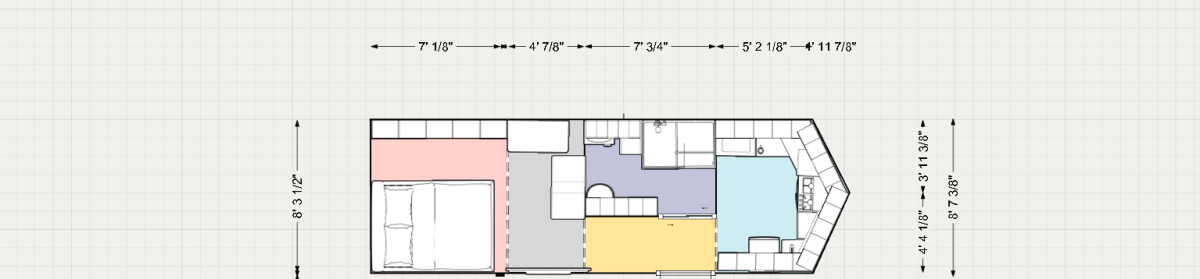
Driver Side Plumbing Plan
The driver side of the CTC houses the primary fresh water fill port, tank venting, and any service‑side plumbing connections.
This plan documents the functional purpose of the driver side plumbing, the routing of fill and vent lines, installation considerations, and how this side integrates with the overall plumbing system.
Purpose of the Driver Side Plumbing
The driver side plumbing layout is designed around three core functions:
- Fresh Water Fill: The main exterior fill port for the 50‑gallon fresh water tank.
- Tank Venting: A dedicated vent outlet to prevent pressure buildup during filling and use.
- Service Access: A clean, accessible location for future plumbing service points or inspection panels.
This side of the trailer is intentionally kept simple and functional, with short, direct routing to the tank inside the bathroom area.
System Components
- Fresh Water Fill Port: Exterior fill connection mounted on the driver side wall.
- Fill Line: 1–1.25″ hose routed from the fill port to the tank inlet.
- Tank Vent Line: 1/2″ or 5/8″ vent hose routed from the tank to an exterior vent outlet.
- Exterior Vent Outlet: Weather‑protected vent termination on the driver side wall.
- Interior Routing Channel: Protected cavity between the wall and tank location.
- Optional Access Panel: Future service access for fill/vent line inspection.
Driver Side Plumbing Layout (ASCII)
This diagram shows the driver side plumbing routing from the exterior wall to the fresh water tank.
Exterior - Driver Side Wall
┌───────────────────────────────────────────────────────────────┐
│   [ Fresh Water Fill Port ]        [ Tank Vent Outlet ]       │
│            │                                   ▲              │
└────────────┼───────────────────────────────────┼──────────────┘
             │ Fill Line                         │ Vent Line
             ▼                                   │
      ┌───────────────────────────────┐          │
      │   Interior - Bathroom Area    │          │
      │                               │          │
      │   ┌───────────────────────┐   │          │
      │   │   50-Gal Fresh Tank   │◄──┘          │
      │   └───────────────────────┘              │
      │           ▲                              │
      │           │                              │
      │     To Pump & Manifold                   │
      └──────────────────────────────────────────┘
Routing Strategy
The routing on the driver side is intentionally simple and direct to minimize complexity and reduce the risk of leaks or freezing.
- Shortest Path: Fill and vent lines take the most direct route to the tank.
- Protected Routing: Lines run through insulated interior cavities whenever possible.
- Minimal Bends: Avoids sharp turns that restrict flow or trap water.
- Vent Height: Vent outlet is mounted higher than the tank to prevent overflow.
- Serviceability: Lines remain accessible for inspection and replacement.
Installation Notes
These guidelines ensure a clean, reliable installation on the driver side.
- Wall Penetrations: Use sealed, reinforced grommets for fill and vent lines.
- Secure Mounting: Fill port and vent outlet mounted to structural framing.
- Line Support: Use clamps or brackets to prevent hose sagging.
- Freeze Protection: Keep lines inside conditioned space where possible.
- Tank Connection: Fill line connects to tank inlet; vent line connects to tank vent fitting.
- Testing: Perform leak and flow tests after installation.
Integration With the Plumbing System
The driver side plumbing is the entry point for the entire fresh water system.
Once water enters the tank, it is pressurized by the pump and distributed throughout the trailer.
- Cold Water: Tank → Pump → Manifold → Fixtures
- Hot Water: Tank → Pump → Heater (garage) → Fixtures
- Grey Water: Not routed on the driver side
- Toilet: Self‑contained, no connection to driver side plumbing
Related Pages
- Plumbing Master Plan
- Plumbing Master Diagram
- Kitchen Plumbing Plan
- Bathroom Plumbing Plan
- Passenger Side Plumbing Plan
- Driver Side Plumbing Diagram
How This Plan Will Evolve
As the build progresses, this page will be updated with final component selections, exact routing paths, installation photos, and any additional driver‑side plumbing features such as auxiliary service ports or winterization valves.