
Black Water Tank Install

Cargo Trailer Camper Conversion – Black Water Tank Install

As part of researching different plumbing layouts for this build, I found a helpful reference video titled
“Cargo Trailer Camper Conversion – Black Water Tank Install” by Be Free Builds.
This video walks through the process of mounting a black water tank under a cargo trailer and adding the basic plumbing components needed for a toilet installation.

You can watch the video here:

Cargo Trailer Camper Conversion – Black Water Tank Install

Black Tank Installation on Custom Cargo Trailer Camper Toy Hauler RV DIY Van Conversion Bathroom


What the Video Covers

The creator demonstrates the full installation process for an under‑mounted black water tank, including:

  • Tank positioning between the trailer frame rails
  • Mounting method using metal straps and wood blocking
  • Cutting openings for the toilet inlet and drain fittings
  • Basic plumbing connections for the toilet and venting
  • Securing the tank to prevent movement during travel

The video provides a good visual reference for how a black tank can be mounted beneath a cargo trailer, especially for DIY conversions where space is limited.


Key Takeaways

  • Frame spacing matters: The tank must fit cleanly between the frame rails without interfering with crossmembers.
  • Strap protection is important: Several commenters note the need for rubber padding between metal straps and the tank to prevent wear over time.
  • Vent routing: The video shows the tank installation but does not go in-depth on vent placement; this is something to plan carefully.
  • Ground clearance: The tank sits below the floor line, so clearance must be considered to avoid bottoming out.
  • Wood vs. metal bracing: Some viewers recommend replacing wood blocks with steel for long-term durability.

Why This Video Is Useful for My Build

Even though my build will not use a black water tank (composting toilet), this video is still valuable for understanding:

  • How tanks are mounted under a cargo trailer
  • How plumbing penetrations are cut and sealed
  • How much space tanks require beneath the floor
  • What to avoid (sharp edges, unsupported weight, low clearance)

This reference helps inform decisions for my fresh water and grey water tank installations, as well as general under‑frame routing and protection.


Additional Notes

The comments section includes useful feedback from other builders, including suggestions for:

  • Using rubber padding or tire rubber between straps and tank
  • Upgrading to steel bracing instead of wood
  • Ensuring proper venting through the wall or roof
  • Checking tank clearance when fully filled

As I continue planning the plumbing system for this build, I’ll reference this video for mounting ideas, strap design, and under‑frame layout considerations.
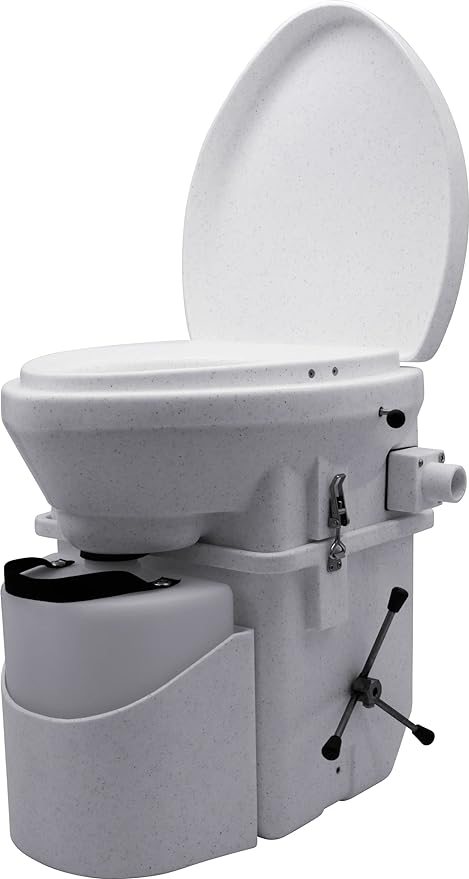
Rethinking the Nature’s Head: My Composting Toilet Deep Dive

Rethinking the Nature’s Head: My Composting Toilet Deep Dive

When I first started planning this build, the toilet decision felt “done.” I picked the Nature’s Head, dropped it into the plans, and moved on.
It’s a proven, popular composting toilet with a solid track record, and it slotted neatly into the bathroom layout without much debate.

But as this project has evolved, so has my thinking. Today was one of those days where I went down a deep rabbit hole on composting toilets—especially the DIY side—and came back up seriously questioning whether a $1,000+ commercial unit still makes sense for this build.


What a Composting Toilet Really Is

The more I read, the more I realized how simple the core system really is. Strip away the marketing and molded housings, and a composting toilet is basically:

  • A solids container for the composting material and waste
  • A liquids diverter to keep urine separate
  • A small ventilation system to move air and control odor

That’s the heart of it. Everything else is enclosure, ergonomics, and branding.

Nature’s Head does all of that in a clean, integrated package—and it does it well. But once you understand the underlying components, it’s hard not to look at that four-figure price tag and start doing the math.


I’m Not Above Building My Own

One thing about this build: I’m not afraid to get hands-on. I’m already designing and installing plumbing, electrical, propane, and HVAC systems.
So when I look at a composting toilet and realize it’s mostly smart carpentry plus a few key parts, the thought naturally pops up:

“I can build something just as functional for a fraction of the cost.”

And at this point, I really believe that.

The Nature’s Head is still a great product. It’s well-engineered, well-documented, and widely used. But $1,000+ (once you factor in tax and shipping) is a big chunk of budget for something I might be able to replicate for a couple hundred dollars and a weekend of focused work.


DIY Composting Toilet Kits Are Everywhere

Once you start looking, you realize there’s an entire ecosystem around DIY composting toilets:

  • Urine diverters you can buy as standalone components
  • 12V vent fans designed specifically for composting setups
  • Complete “guts only” kits that let you build your own enclosure

That last one is especially interesting: I can build a custom enclosure that fits my space, my height, my storage needs, and my aesthetic—without paying for a pre-molded shell that was designed for a generic use case.

In other words, I can design the toilet to fit the trailer, not force the trailer to fit the toilet.


Ventilation: The Real Key (And the Easy Part)

The more I read, the more one theme kept coming up: ventilation is what makes or breaks a composting toilet.

If you have:

  • A sealed solids chamber
  • A properly sized vent line
  • A small, reliable 12V fan pulling air out

…then odor control becomes very manageable. And those are all things I’m already dealing with in other parts of the build—fans, vents, penetrations, and airflow.

So from a systems perspective, a DIY composting toilet doesn’t feel like a stretch. It feels like one more small subsystem that plugs into the larger ventilation and electrical picture.


Where I’m At Right Now

On paper, the Nature’s Head is still the “official” toilet in my plans. It’s in the diagrams, it’s in the layouts, and it’s in the documentation.
But mentally, I’m in a different place now.

I’m keeping my options open. I’m not locked into a commercial unit just because I wrote it down early in the process.
As the build progresses and I get deeper into the details, the idea of a custom composting toilet—built around my space, my needs, and my budget—is becoming more realistic and more appealing.


The Takeaway for Today

Today wasn’t about buying anything or installing anything. It was about stepping back and asking a simple question:

“Does this expensive, off-the-shelf solution still make sense now that I understand how it works?”

Right now, my honest answer is: maybe not.

I’m not making a final call yet, but I’m also not blindly paying $1,000+ for something I can likely build myself for a fraction of that cost.
This build has always been about intentional choices, and the toilet is officially back on the “intentional choice” list.

For now, I’m going to keep researching DIY composting designs, sketching ideas, and watching how the rest of the systems come together.
When it’s time to commit, I want that decision to feel as solid as the rest of the trailer—not just “good enough,” but truly aligned with how I’m building this thing: thoughtfully, creatively, and on purpose.

Shower

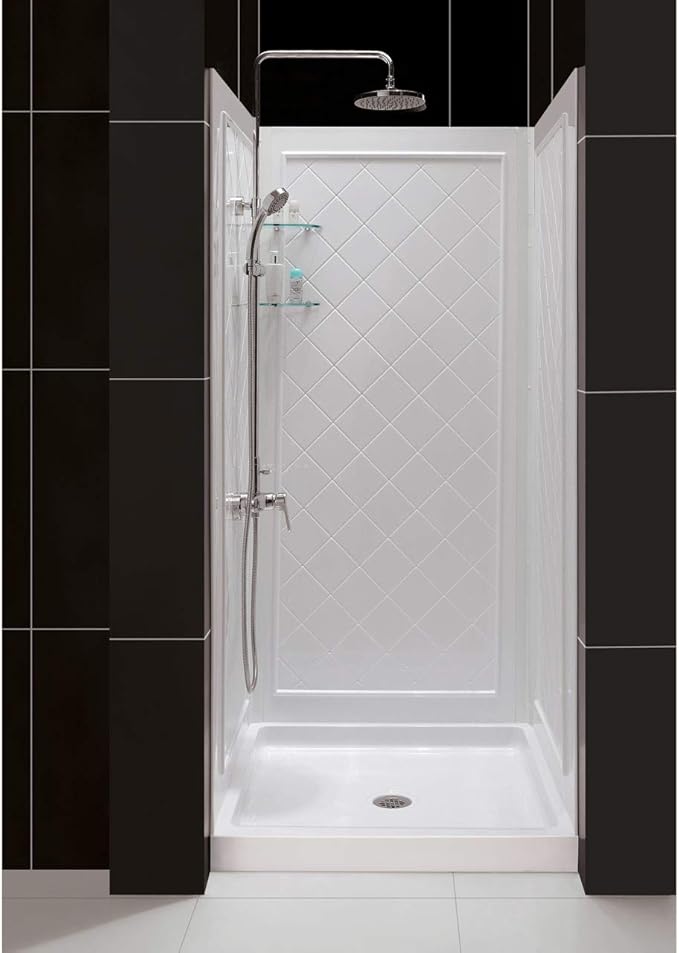
DreamLine 36″ Ă— 36″ Shower Base & QWALL‑5 Backwall Kit

Model: DL‑6194C‑01
Brand: DreamLine
Color: White
Material: Acrylic / ABS
Kit Includes: 36″ Ă— 36″ Single‑Threshold Shower Base + QWALL‑5 Backwall Panels
Product Link:

View on Amazon

DreamLine 36x36 Shower Base and QWALL-5 Backwall Kit

Product Dimensions

Overall Kit Size (D Ă— W Ă— H): 36″ Ă— 36″ Ă— 76.75″
Shower Base: 36″ Ă— 36″ (Center Drain)
Backwall Panels: Trim‑to‑fit design

Weights

Total Weight: 79.4 lbs

Key Features

  • SlipGrip textured floor surface for improved safety
  • High‑gloss, non‑porous acrylic for easy cleaning
  • Backwall panels made from Acrylic/ABS
  • Backwalls install over a solid surface (not directly to studs)
  • Base installs directly to studs; cUPC certified
  • Trim‑to‑size sidewall design for flexible installation
  • Lifetime Limited Warranty (base), 1‑year Limited Warranty (backwalls)

Tanks

Fresh & Grey Water Tanks for CTC Build

I plan to use these tanks as the core of my fresh and grey water system for the CTC build.
They were chosen for their durability, simple rectangular geometry, and reliable sizing that fits the layout of my front tank cabinet.
These specs will be used throughout my planning process for weight distribution, plumbing routing, and cabinet design.
The dimensions and capacities listed here reflect the exact tanks I will install in the trailer.


50 Gallon Fresh Water Tank — T5000BPK

Brand: classAcustoms
Model: T5000BPK
Capacity: 50 gallons
Material: Polyethylene
Product Link:

View on Amazon

Dimensions
  • Length: 14.25"
  • Width: 22.25"
  • Height: 38.25"

30 Gallon Grey Water Tank — T3000‑BPK (×2)

Brand: classAcustoms
Model: T3000‑BPK
Capacity: 30 gallons each
Material: Polyethylene
Product Link:

View on Amazon

Dimensions (Each)
  • Length: 12"
  • Width: 17.5"
  • Height: 34.5"