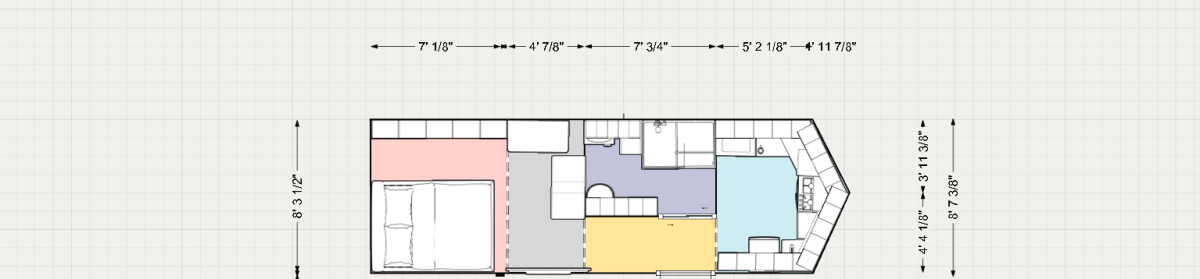
Electrical System Overview
The electrical system provides all 12V and 120V power for the cargo trailer conversion. It includes
shore power input, inverter/charger functionality, battery storage, distribution panels, branch
circuits, and room‑specific electrical components. This page serves as the central reference for
the entire electrical architecture.
System Purpose
The electrical system supports the following functions:
- 120V AC power distribution for outlets, appliances, and the mini‑split system
- 12V DC power distribution for lighting, fans, pumps, and control systems
- Battery storage for off‑grid operation
- Shore power connection for charging and full‑load operation
- Inverter power for 120V circuits when shore power is unavailable
Major Components
- Shore Power Inlet: 30A or 50A service depending on final configuration
- Inverter/Charger: Provides battery charging and 120V AC output when off‑grid
- Battery Bank: Supplies 12V DC and inverter input
- 120V AC Distribution Panel: Breakers for outlets, appliances, and HVAC
- 12V DC Fuse Panel: Circuits for lighting, fans, pumps, and control systems
- GFCI Protection: Required for bathroom, kitchen, and exterior outlets
- Dedicated Circuits: Mini‑split, washer/dryer, microwave, and water heater (if applicable)
Routing & Layout Strategy
The electrical system is routed to minimize cable length, reduce voltage drop, and maintain clean
separation between AC and DC wiring. Key routing decisions include:
- AC and DC panels located in the garage for centralized access
- 12V lighting circuits routed through the ceiling cavity
- 120V branch circuits routed along wall framing for easy serviceability
- Bathroom GFCI outlet feeding downstream protected outlets
- Dedicated 120V circuits for high‑load appliances
Room‑by‑Room Electrical Summary
Bathroom
- GFCI‑protected outlet
- Lighting circuit
- Exhaust fan
- Washer/dryer electrical supply
- Power for Camplux heater (if model requires it)
Kitchen
- Countertop GFCI outlets
- Refrigerator circuit
- Microwave or cooktop circuit (if applicable)
- Lighting circuit
- Ventilation fan
Bedroom
- Lighting circuit
- Outlets near bed and fold‑down table
- Optional USB/12V charging ports
Office
- Outlets for electronics and workstation
- Lighting circuit
- TV power
- Air handler electrical connection
Hallway
- Lighting circuit
- Switches for shared zones
Garage
- 120V AC distribution panel
- 12V DC fuse panel
- Inverter/charger
- Battery bank
- Mini‑split outdoor unit (if mounted here)
Load Management
The electrical system is designed to balance loads across circuits and prevent overload conditions.
Load charts are maintained to track:
- 120V appliance wattage
- 12V lighting and accessory loads
- HVAC power consumption
- Battery draw and inverter efficiency
Safety & Protection
- GFCI protection for bathroom, kitchen, and exterior outlets
- AFCI breakers where required
- Proper wire gauge for all AC and DC circuits
- Battery fusing at the positive terminal
- AC/DC separation to prevent interference and hazards
- Bonding and grounding per RV electrical standards
Integration With Other Systems
- HVAC System: Mini‑split requires dedicated 120V circuit
- Plumbing System: Water pump powered by 12V circuit
- Hot Water System: Camplux heater may require 12V or 120V depending on model
- Propane System: Electrical shutoff solenoid (if used)