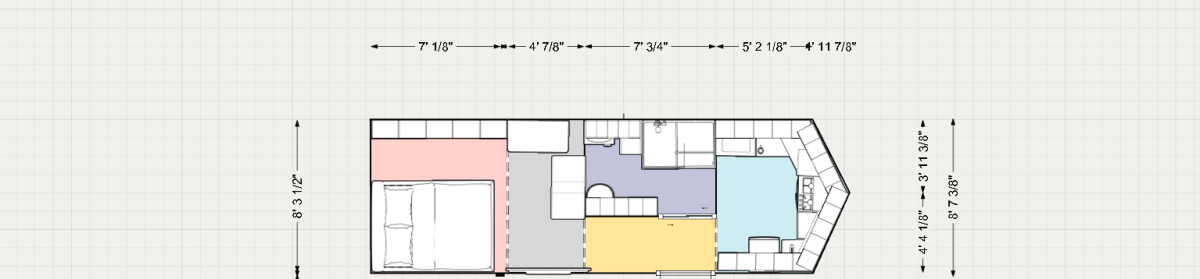
Updated Diagram – Urine Separator, Sink Drain, Sump Pump, and Gray Tank System
This diagram shows the updated plumbing layout for the bathroom: the composting toilet’s urine separator and the bathroom sink both drain into the sump pump box.
The sump pump then sends all liquids to the interior gray tank, with a check valve placed before the gray tank to prevent any backflow.
The toilet sits elevated above the sump pump by at least one foot, ensuring reliable gravity flow.
System Diagram (Top‑Down Flow)
                 ┌───────────────────────────────┐
                 │     COMPOSTING TOILET         │
                 │   (Urine Separator Outlet)    │
                 └──────────────┬────────────────┘
                                │
                                │  Gravity-fed Urine Line
                                ▼
                 ┌───────────────────────────────┐
                 │       BATHROOM SINK           │
                 │  (Drain Tied Into Urine Line) │
                 └──────────────┬────────────────┘
                                │
                                ▼
                 ┌───────────────────────────────┐
                 │   COMBINED DRAIN LINE (1")    │
                 │  Sink + Urine to Sump Pump    │
                 └──────────────┬────────────────┘
                                │
                                ▼
                 ┌───────────────────────────────┐
                 │     SUMP PUMP BOX (12V)       │
                 │  - Collects shower water      │
                 │  - Collects urine + sink      │
                 │  - Auto pump activation       │
                 └──────────────┬────────────────┘
                                │ Pressurized Output
                                ▼
                 ┌───────────────────────────────┐
                 │         CHECK VALVE           │
                 │  (Prevents backflow from tank)│
                 └──────────────┬────────────────┘
                                │
                                ▼
                 ┌───────────────────────────────┐
                 │       INTERIOR GRAY TANK      │
                 │  - Receives all pumped liquid │
                 └───────────────────────────────┘
Side‑View Height Relationship
   [Composting Toilet]
            │
            │  (Urine Line)
            ▼
   [Sink Drain Tie-In]
            │
            ▼
   (Combined Drain Line)
            │
            ▼
   [Raised Shower Platform]───────────────┐
            │                              │
            ▼                              │
      [Sump Pump Box]  <───────────────────┘
            │   (Pumps upward)
            ▼
      [Check Valve]
            │
            ▼
      [Interior Gray Tank]
This layout ensures the toilet and sink both drain by gravity into the sump pump, while the sump pump handles all elevation changes needed to reach the gray tank.
Why the Sink Tie‑In Helps
Tying the bathroom sink into the urine line provides several benefits:
- Flushes the urine line with clean water every time the sink is used.
- Prevents salt buildup or odor in the urine hose.
- Adds enough liquid volume to reliably trigger the sump pump float switch.
- Reduces plumbing complexity by combining two low‑flow drains into one line.
Why the Check Valve Belongs Before the Gray Tank
Placing the check valve on the pressurized discharge line (not the urine line) ensures:
- No gray water can flow backward into the sump pump box.
- No contamination risk for the toilet or sink drain lines.
- The sump pump remains protected from tank pressure or sloshing.
This updated diagram reflects the final intended flow path for the bathroom plumbing system and will be used as part of the full interior‑only plumbing documentation.